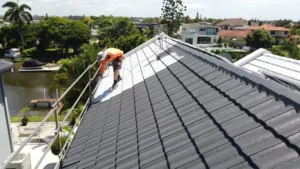
Every year, as cyclone season approaches, thousands of Gold Coast homeowners cross their fingers and hope for the best. But hope isn’t a strategy when it comes to protecting your most valuable asset – your home.
The devastating reality is that many Gold Coast roofs simply aren’t prepared for the intense winds, driving rain, and relentless battering that cyclones bring to our region. What starts as a bit of overdue maintenance can quickly escalate into tens of thousands of dollars in emergency repairs, water damage, and insurance headaches.
The good news? You don’t have to be one of the unlucky ones scrambling for emergency roof repairs while a cyclone warning is in effect. With the right preparation and professional roof restoration, you can face cyclone season with confidence instead of dread.
In this guide, we’ll show you exactly how to assess your roof’s cyclone readiness, understand the real risks, and take action before it’s too late. Your family’s safety and your home’s protection start from the top down.
How Cyclones Causes Problems in Unprepared Roofs
Understanding how cyclones actually affect roofs helps you see why preparation is so critical. It’s not just about rain – though that’s certainly part of it.
Wind uplift is the primary culprit. When cyclonic winds rush over your roof, they create an area of low pressure above while the air inside your roof cavity pushes up from below. This creates a powerful lifting force. If your tiles aren’t properly secured, they act like wings – literally trying to fly off your home. Once one tile goes, the wind can get underneath adjacent tiles, creating a domino effect that can strip large sections of roofing in minutes. This is more common in Northern QLD than the Gold Coast but it still occasionally happens.
Water penetration is where the real damage happens inside your home. Even if most tiles stay put, cyclonic rain doesn’t fall straight down – it’s driven horizontally and in all directions by strong wind. Porous, weathered tiles that might handle normal rain perfectly may become saturated and leak under cyclone conditions. Any resistance to quick drainage on the roof may cause water to bank up at flashings and valley gutters and enter the roof space.
Older concrete tile roofs are particularly vulnerable because they become increasingly porous over time. Gold Coast’s combination of humidity and wet summers creates a cycle where tiles absorb water, expand, dry out, contract, and gradually weaken. After 20-30 years of this cycle, tiles that once shed water perfectly now act like sponges.
We’ve seen roofs that looked perfectly fine on a sunny day become complete disasters after a severe storm – not because they were badly installed originally, but because decades of Queensland weather had slowly compromised their integrity.
Most Common causes of Roof Leaks During Cyclone

Before you can cyclone-proof your roof, you need to know what you’re dealing with. Here are the seven critical areas that determine whether your roof will survive severe weather.
1. Broken or Cracked Tiles
From ground level, a few broken tiles might seem like a minor cosmetic issue. During a cyclone they can cause real problems.
With Intense rain fall small cracks and chips in roof tiles may actually leak as the quantity of water flowing over them increases. A roof that may have been fine under light rain may leak during high intensity rain fall combined with strong cyclonic winds.
2. Porous and Weathered Tiles
Concrete Tiles don’t stay impervious forever.
Here’s a simple test: after a good rain, look at your roof. Do the tiles stay dark and wet-looking for hours, even after the rain stops? That’s water absorption – your tiles have become porous. Well sealed tiles will be impervious and not absorb water at all.
Gold Coast’s humid subtropical climate accelerates this process. Our wet summers mean tiles go through constant wet-dry cycles. Each cycle opens the concrete’s pores a little more. After 10-15 years, tiles that were originally quite waterproof can absorb significant moisture.
During a cyclone, porous tiles become waterlogged, adding weight to your roof structure while simultaneously allowing water to penetrate through to your roof timbers and ceiling cavity. It’s a double threat.
3. Failed or Missing Pointing
Ridge capping and pointing do more than look neat – they’re critical structural elements that hold your roof together.
The pointing is the cement or flexible compound that secures ridge caps and fills gaps between tiles. Older cement-based pointing becomes brittle over time. You’ll see cracking, crumbling, or sections that have fallen away entirely.
Check along ridge lines, hips, and valleys. Can you see gaps where pointing should be? Does it look cracked or deteriorated? Gently press on ridge caps (if you can safely access them) – do they move or feel loose?
During a cyclone, failed pointing means your ridge caps can leak. Cracks in pointing are common entry points for wind driven rainwater and also something that can not be fixed until the rain stops, roof dries and a roof tiler repoints the capping.
5. Damaged Flashing
Flashing is the metal sheeting that seals the joins where your roof meets other structures – chimneys, wall junctions, valleys, and around skylights or vents.
Over time, flashing deteriorates through rust, seal breakdown, and physical damage. Look for rust stains, lifted edges, gaps in sealant, or missing sections entirely.
These are critical weak points during cyclones because they’re already transitions between different materials and structures. If flashing fails, water floods in at these vulnerable junctions, often causing extensive internal damage before you even notice.
6. Gutter and Downpipe Condition
You might not think of gutters as part of cyclone preparation, but they play a crucial role in severe weather.
Blocked or damaged gutters can’t handle the intense rainfall that accompanies cyclones. When gutters overflow, water backs up under roof tiles and into the fascia and eaves.
Check that gutters are clear of debris and that flow of water through the storm water system underground is good.
7. Overall Roof Age and Coating Condition
Stand back and look at your roof’s overall appearance. How old is it? Has it ever been restored or recoated?
Concrete tile roofs typically last 50+ years structurally, but they need maintenance and restoration around the 10 – 15 year mark. If your roof is approaching or past this age without restoration, it’s living on borrowed time – especially in cyclone conditions.
Faded colour, patchy appearance, visible moss or lichen growth, and a generally tired look all indicate a roof that needs professional attention. The protective surface of concrete tiles degrades over time, making them increasingly porous and vulnerable.
If you can tick off several items on this checklist as concerns, your roof isn’t cyclone-ready. The good news is that professional roof restoration addresses all these issues simultaneously.
How Professional Roof Restoration Protects Against Cyclones
Now that you understand the vulnerabilities, let’s look at how proper roof restoration transforms a liability into a fortress.
High-pressure cleaning does more than make your roof look good – it removes all the debris, moss, lichen, and loose material on the roof. It gives the operator a look at each and every tile as the roof is cleaned.
Replacing all broken tiles Once the roof has been cleaned, all broken tiles and roof defects become clear. The roof tiles will work their way around and replace all tiles with chips of cracks big enough to pose a risk of roof leakage.
Modern flexible repointing is a game-changer compared to old cement-based pointing. The modern compounds we use have polymers and rubbers on them and flex with building movement and temperature changes rather than cracking. This means your ridge capping stays securely bonded even after some minor seasonal building movement.
High-Build primer creates what’s essentially a waterproof membrane across your entire roof. This primer penetrates into the tile’s pores and creates a sealed barrier. When cyclonic rain hits, water runs off instead of soaking in. This dramatically reduces the risk of water penetration while also preventing tiles from becoming waterlogged and heavy.
The primer also improves tile-to-tile bonding, making the roof act more as a unified surface rather than thousands of individual tiles. This distributed strength helps resist wind uplift.
Premium colour coating adds multiple additional layers of protection. We’re not talking about a thin paint job – these are thick, professional-grade roof coatings specifically designed for Australian conditions. Two generous coats create a durable, weather-resistant shell that protects the tile beneath while maintaining the sealed, waterproof surface.
Think of it like this: an unrestored concrete tile roof is like a sponge sitting on your house. A properly restored roof is like a solid, sealed shield. Same tiles underneath, completely different performance in severe weather.
15-year warranty for roof coating that comes with our professional restorations isn’t just about peace of mind – it’s backed by decades of research and testing in cyclone-prone regions across Australia. Dulux has invested heavily in developing products specifically for our harsh climate. When they warranty a roof for 15 years, they’re confident it will withstand multiple cyclone seasons.
From a structural perspective, a restored roof with properly sealed tiles, secure ridge capping, flexible pointing, and waterproof coating can significantly increase wind resistance compared to an ageing, deteriorated roof. While we can’t make guarantees about category 5 direct hits (nothing can survive those intact), a properly restored roof gives you the best possible chance of emerging from severe weather with minimal damage.
You can see examples of our completed restoration projects in our gallery, showcasing the transformation from weathered, vulnerable roofs to fully protected, cyclone-ready systems.
The Best Time to Cyclone-Proof Your Roof
Timing is everything when it comes to cyclone preparation. Wait too long, and you’ll be competing with every other panicking homeowner for limited slots with roof restoration companies.
Why waiting until November is too late:
Queensland’s official cyclone season runs from November to April, but severe weather can occur outside these months. By the time November rolls around, professional roof restoration companies are typically booked solid for weeks or months ahead. Everyone suddenly remembers their roof needs attention when the first cyclone forms off the coast.
Additionally, roof coating requires specific weather conditions to cure properly. We need dry weather with minimal wind for application and several days of good conditions afterwards. As we move into cyclone season, suitable weather windows become increasingly rare and unpredictable.
The advantage of Gold Coast’s milder winter months:
May through August offers the ideal window for roof restoration work on the Gold Coast. Our winters are mild compared to southern states – perfect working conditions for roof crews and ideal for coating application. You’ll also find:
- Greater availability with roof restoration companies
- More flexibility in scheduling around your needs
- Better weather certainty for proper coating cure times
- Competitive pricing compared to peak season panic
The “prepare in winter, protected by summer” strategy:
Smart Gold Coast homeowners book their roof restoration in June or July. The work is completed by August or September. When summer storms and cyclone season arrive, they’re sitting pretty with a freshly restored, cyclone-ready roof backed by a 15-year warranty.
Don’t be the homeowner calling for emergency quotes while a cyclone warning is in effect. Be the one who prepared months earlier and can face storm season with confidence.
Conclusion
Your roof is your home’s first and most critical line of defence against cyclones. An unprepared, deteriorating roof isn’t just a maintenance issue – it’s a genuine threat to your family’s safety, your home’s structural integrity, and your financial security.
The difference between a roof that survives cyclone season intact and one that fails catastrophically often comes down to preparation. Properly restored roofs with modern coatings, secure ridge capping, flexible pointing, and sealed waterproof surfaces give you the protection you need when severe weather arrives.
The peace of mind that comes with knowing your roof is cyclone-ready is invaluable. No more anxiously watching the weather forecast, hoping your ageing tiles will hold together through one more storm. No more emergency calls to insurance companies or frantic searches for emergency repair services while half your street is doing the same.
Don’t wait for the cyclone warning to take action. The best time to cyclone-proof your roof is before you need it to be cyclone-proof. Your family’s safety, your home’s protection, and your own peace of mind all start with a roof that’s ready for whatever Queensland’s weather throws at it.
Don’t Wait for the Cyclone Warning
Is your Gold Coast roof ready to protect your family when the next cyclone hits?
At All Roof Restoration Gold Coast, we specialise in cyclone-proofing concrete tile roofs with our comprehensive restoration process. As certified applicators, we back every job with a 15-year warranty – giving you peace of mind through countless cyclone seasons ahead.
Our team of local Gold Coast experts will:
✓ Inspect your roof using advanced aerial imaging technology
✓ Provide an honest, no-pressure assessment
✓ Complete your restoration before cyclone season arrives
✓ Use only premium Dulux products for maximum protection
✓ Offer flexible payment options (just $100 deposit to secure your booking)
Get Your Free Cyclone Readiness Roof Assessment Today
Call us on 0401 513 253 or request a free quote online.
Don’t let the next cyclone catch you unprepared. Protect your home, protect your family, protect your investment.
Servicing all Gold Coast areas from Coolangatta to Brisbane.
Builder Licence: BLD 15388345